All Categories
Featured

Understanding Costs From Delaware Solar Panel Installation Companies
Table of Contents
- – Comparing Delaware Solar Panel Installation Com...
- – How You Can Best Use The 30% Federal Tax Credit
- – Assessing Delaware Solar Panel Installation Co...
- – Analyzing How Low-Income Programs Support Dela...
- – How You Can Gain More From Your Delaware Solar...
- – Coordinating HOA Approvals And Permits For You...
Comparing Delaware Solar Panel Installation Companies For Your Project
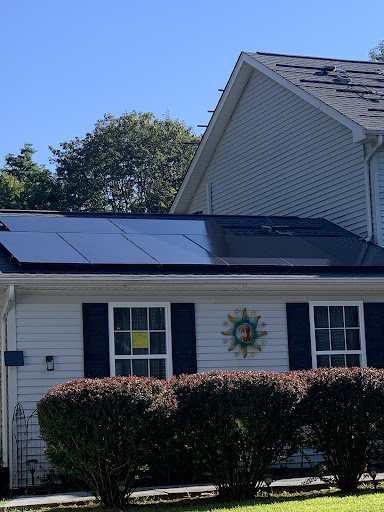
When you start researching Delaware Solar Panel Installation Companies, you are essentially evaluating how a technical system will incorporate with your home to reduce long-term utility expenses. Because a typical home system necessitates a significant upfront investment ranging from $29,720 to $40,210 for a 13.69 kW array at $2.55 per watt, grasping the mechanics of provider selection is essential for protecting your financial interests. The procedure of Finding a solar panel installation company in Delaware involves more than just comparing quotes, as you must also consider roof suitability, local permitting, and the specific incentives that influence your overall recoup period. By evaluating Delaware-based solar panel installation services based on technical expertise and proven experience, you ensure that your hardware is sized correctly to meet your particular household consumption needs. This article provides the essential knowledge you need to traverse the professional landscape and locate the most reliable experts for your project.
“Each individual state, county, and neighborhood may have its own permitting requirements when conducting home improvement projects.” — Lumina Solar
How You Can Best Use The 30% Federal Tax Credit
A 30% ITC represents the fundamental financial offset available when you engage Delaware-based solar panel installation services to lower your total investment amount. This credit is credited directly to the total system cost, effectively reducing your federal income tax liability by nearly one-third of the initial expenditure. Beyond this federal provision, you can further lower your net cost through diverse state-level methods that incentivize the generation of renewable electricity.
“The Solar + Storage Pilot Program offers residential, commercial and nonprofit entities rebates for the installation of battery energy storage systems paired with solar.” — energysage.com
To grasp the complete range of potential savings, evaluate how these financial instruments interact with your specific utility provider and production capacity:
| Incentive Type | Mechanism | Benefit Limit |
|---|---|---|
| Federal Tax Credit | 30% concerning total price tag | No specific cap |
| Utility Rebate | $0.70 per watt | $6,000 maximum |
| Utility Rebate | $0.50 per watt (first 5 kW) | Defined by capacity |
| SREC Income | 1 Solar Certificate every 1 MWh | Market-dependent |
Once your hardware is functional, utility credit program allows you to send excess electricity back to the grid for credit, while every 1 MWh of solar electricity generated earns you one SREC Token. These certificates operate as tradable assets, yielding a regular revenue stream that contributes to your 8.4-year return timeline. Because these programs differ by provider and local policy, you must confirm which specific rebates your local utility provides before finalizing your equipment purchase.
Verify your utility provider's current rebate structure and accessible funding caps before executing any installation contract.
When selecting Delaware Solar Panel Installation Companies, you must evaluate how your system size, typically ranging from 5 kW to 14 kW, interacts with roof solar compatibility and shading to determine your total system cost. Before you commit to a power purchase agreement or solar financing, you should speak with Solar Panel Installation to evaluate contractor credentials, such as NABCEP license, and confirm how government credit savings and Delmarva Power or Delaware Electric Cooperative rebates influence your return timeline. By utilizing net metering and earning a Solar Renewable Energy Certificate for every 1 MWh produced, you effectively reduce your net expenses, though you must first ensure your chosen vendor navigates local solar permit requirements and HOA rules to secure necessary interconnection approval. Whether you are keen on adding battery storage for resilience or exploring affordable solar programs like DE SHINES, requesting a complimentary estimate allows you to analyze the exact return on investment based on a 13.69 kW system costing approximately $29,720 to $40,210 before incentives.
Assessing Delaware Solar Panel Installation Companies: What You Should Look For
Delaware solar panel installation companies reviewed and compared centers on verifying the professional proficiency of the workforce and the firm’s track record with regional regulatory requirements. Because solar energy relies on precise electrical engineering, the main indicator of a high-quality vendor is the presence of personnel holding NABCEP license. This credential indicates that the technicians have undergone rigorous training and passed a comprehensive examination regarding the safety and performance standards of solar deployment.
“According to the NABCEP, “The NABCEP PV Installation Professional and Solar Heating Installer Certifications are accredited to the ISO/IEC 17024 standard by the American National Standards Institute (ANSI).”” — icma.org
Beyond individual technical credentials, you must assess a company based on its history of navigating the complexities of local infrastructure. An effective solar company acts as your intermediary with municipal authorities and area utility providers, ensuring that all paperwork for grid connectivity is submitted precisely and expeditiously. When comparing firms, prioritize those that demonstrate the following qualifications:
- Evidence of active, legitimate NABCEP accreditation for their lead field technicians.
- Proven success in securing local building permits for residential projects ranging from 5 kW to 14 kW.
- Established relationships with local utility departments to simplify the interconnection process.
- Transparent disclosure of their internal oversight process for validating system safety before final activation.
Request evidence of these certifications and a list of three recent local references to confirm the provider consistently satisfies these professional benchmarks before you execute any service agreement.
Analyzing How Low-Income Programs Support Delaware Solar Panel Installation
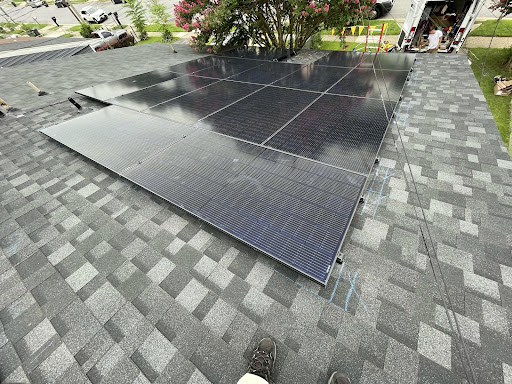
Low-income access to renewable energy is facilitated through targeted grant programs and the DE SHINES initiative, which collectively work to remove the financial barriers that often hinder households and nonprofits from installing solar technology. These programs offer a pathway to lower or eliminate the upfront system cost, ensuring that the benefits of reduced electricity bills are not exclusive to those with significant capital.
“As part of the new program, the agencies will provide grants and low-cost financing for residential and community solar energy projects in disadvantaged areas of Ohio, ultimately lowering electricity bills in low- to moderate-income households.” — solarpowerworldonline.com
When you examine who are the solar panel installers functioning in Delaware, you should ask if they participate in these specific accessibility programs. By integrating state resources with specialized funding, these initiatives allow eligible applicants to offset the initial expenditure required for hardware and labor. This mechanism functions by bridging the divide between standard market pricing and the monetary capacity of qualifying inhabitants.
Programs designed to help low-to-moderate income households usually focus on the following core elements:
- Direct Grants: Non-repayable funds applied directly toward the total installation price to lower the net amount financed.
- System Packaging: Integrating solar hardware with storage unit to maximize energy independence and grid-reliability for eligible properties.
- Nonprofit Support: Dedicated routes for community organizations to utilize solar energy to reduce operational overhead through reduced utility consumption.
- Technical Support: Advice on managing the application procedure to guarantee adherence with program-related requirements.
Confirm your eligibility for government-backed financial assistance by reviewing your household income documentation against the current thresholds set by your local energy agency.
How You Can Gain More From Your Delaware Solar Panel Installation Using Battery Storage
Storage unit is an all-in-one technology that allows you to store and retain excess electricity generated by your PV installation for use during grid outages or at night when your system is not actively producing power. By keeping energy on-site, you effectively decoupling your immediate consumption from your immediate production, which significantly improves the dependability of your energy supply.
“Identify utility meter, inverter and/or associated generation and storage (battery) equipment.” — firstenergycorp.com
When you confer with Delaware-based solar panel installation services, you should understand how storage components function within your home infrastructure. A battery functions as a chemical buffer, absorbing direct current electricity from your panels and converting it back into usable alternating current for your home appliances when necessary. This is especially beneficial for managing the intermittency of solar output and maximizing the usefulness of your system.
The subsequent table details the primary functional differences between systems that rely solely on grid connectivity versus those that incorporate home battery system:
| Feature | Standard Grid-Tied System | System with Battery Storage |
|---|---|---|
| Power During Outages | No | Yes |
| Energy Usage | Real-time only | Delayed/On-demand |
| Grid Independence | Low | Moderate to High |
Several regional programs now offer incentives that combine battery hardware with solar equipment to reduce the total investment amount for eligible households. Integrating these units requires an evaluation of your typical daily energy load and the specific capacity of the battery model you choose to set up.
Ask your contractor to model your specific energy consumption patterns against the depletion capacity of various battery units to determine if the extra expense aligns with your backup power requirements.
Coordinating HOA Approvals And Permits For Your Solar Panel Installation
Navigating HOA and permit requirements when Finding a solar panel installation company in Delaware involves managing both municipal regulatory compliance and the private architectural standards enforced by your community association. Before any equipment is installed, your chosen provider must secure necessary building permits to ensure the structure meets local safety codes and obtain utility interconnection authorization to legally sync your system with the wider electrical grid.
“Notwithstanding division (A) of this section, an owners association may establish reasonable restrictions concerning the size, place, and manner of placement of solar energy collection devices.” — law.justia.com
Homeowners associations (HOAs) establish a layer of oversight that can influence the physical layout of your array. These organizations often maintain design guidelines designed to protect neighborhood appearance, which may dictate where panels can be placed or how wiring must be hidden. To ensure a seamless process, consider these essential steps for handling community and regulatory reviews:
- Examine your association’s Covenants, Conditions, and Restrictions (CC&Rs) to locate explicit solar energy policies.
- Ask that your installer supply official engineering drawings that clearly show panel placement and system visibility from the street.
- File a formal architectural change request promptly, including any required visual renderings of the finished PV installation.
- Confirm that your installer has a proven track record of successfully navigating local permitting offices and HOA oversight boards to avoid project delays.
Always confirm with your local municipal zoning department whether your specific property requires a structural roof evaluation as a mandatory prerequisite for the building permit application.

Table of Contents
- – Comparing Delaware Solar Panel Installation Com...
- – How You Can Best Use The 30% Federal Tax Credit
- – Assessing Delaware Solar Panel Installation Co...
- – Analyzing How Low-Income Programs Support Dela...
- – How You Can Gain More From Your Delaware Solar...
- – Coordinating HOA Approvals And Permits For You...
Latest Posts
Grasping The Costs Quoted By Virginia Solar Panel Installation Companies
What Should You Ask Delaware Solar Panel Installation Companies Before Hiring?
What Most People Get Wrong About Pennsylvania Solar Panel Installation
More
Latest Posts
Grasping The Costs Quoted By Virginia Solar Panel Installation Companies
What Should You Ask Delaware Solar Panel Installation Companies Before Hiring?
What Most People Get Wrong About Pennsylvania Solar Panel Installation